
Work with Neeshee Pandit
Psychoanalyst & Acupuncturist
« poetic punctures for the speaking body »
What does it mean to work with me, and where to begin?
I work in the tradition of the scholar-physician and physician-analyst whose practice is inseparable from philosophical inquiry, poetics, and spiritual life. In this context, you are invited into a relational process that moves through various lines of treatment. Treatment functions as an assemblage of modalities, adapted to each person, session by session. Thus, the healing process becomes a co-constructive, creative, and collaborative process.
When someone comes to see me, they may be experiencing a crisis, or have a specific inquiry, or they may have an interest in a particular dimension of my work. You might arrive for an astrology reading and later enter into psychoanalysis. You may come for psychoanalysis and also be given herbal recommendations, astrological insights, and acupuncture. Your treatment will seamlessly weave together key elements from Ayurveda, Tibetan medicine, acupuncture, analysis, and astrology—or you may find that any one of these domains becomes a totality where these modalities are simultaneously present.
My clinical methodology is best summarized as “meridian analysis.” Meridian analysis signifies an interactive field rather than a collection of isolated modalities. Meridian analysis enacts psychoanalysis as a somatic practice and acupuncture as a psychic event—a singular process of consciousness and conductivity.
When my clients receive hands-on bodywork simultaneously with my wife, Nicole, more layers and dimensions of healing become available. For this reason, many of our clients see us both seasonally or regularly as a team for comprehensive support. Ultimately, the work that unfolds at Somaraja is here to support you in the process of purification, rebalancing, and rejuvenation—wherein your inherent radiance is expressed in dynamic harmony.
I invite you to come work with me, and enter a field where multiplicities move.
Acupuncture \ Moxibustion
French Energetic Acupuncture • Classical Five-Element
Why I Studied Acupuncture
I first encountered acupuncture during my study of Tibetan medicine, where I was also taught Chinese five-element theory. Tibetan styles of acupuncture differ from Chinese theory and practice, with a stronger emphasis placed on moxibustion therapy over needle therapies. The research of Namkhai Norbu Rinpoche establishes the origins of moxibustion in Tibet, the word "moxibustion" even deriving from the Tibetan word metsa.
My interest in acupuncture and Chinese five-element theory led me to study a five-element style of acupuncture at the Worsley Institute. The modern tradition of five-element acupuncture began with George Soulié de Morant, a French polymath who brought classical streams of acupuncture to France in 1927. His magnum opus, L'Acuponcture chinoise, not only translates classical Chinese and Japanese texts but collects a diversity of East Asian traditions—Chinese, Japanese, Vietnamese, and Korean. Soulié de Morant's condensation of East Asian acupuncture makes legible a pluralism that is intrinsic to the development of acupuncture therapy. The French school of acupuncture thus represents a nodal point between classical and modern streams of energetic medicine.
The French school of acupuncture converges in the figure of J.R. Worsley, whose “traditional acupuncture” (or “classical five-element acupuncture”) style became popular in the UK and US in the 1970s. Worsley was a British acupuncturist who studied in the 1950s, absorbing French and Japanese influences through Jacques Lavier (a student of Soulié de Morant) and Ono Bunkei (a master of Japanese Meridian Therapy). At a time when the cultural revolution in China was reshaping the tradition of Chinese medicine in the molds of dialectical materialism, Worsley learned from Japanese, Korean, and Chinese teachers living in the East Asian diaspora who had preserved classical lineages of acupuncture. Worsley's five-element system can thus be traced to the neoclassical milieu of French energetic acupuncture, Japanese meridian therapy, and homeopathy—a syncretic tradition that not only represented Japanese, Korean, and Chinese styles of acupuncture but mingled with Western therapeutic notions of the unconscious and the vital force.
In my master's thesis, Spirits of the Unconscious: Possession and Resurrection in Acupuncture Therapeutics, I proposed that European streams of acupuncture, originating in early twentieth-century France, absorbed the cultural milieu of their times, including psychoanalysis, homeopathy, and naturopathy.
Philosophy
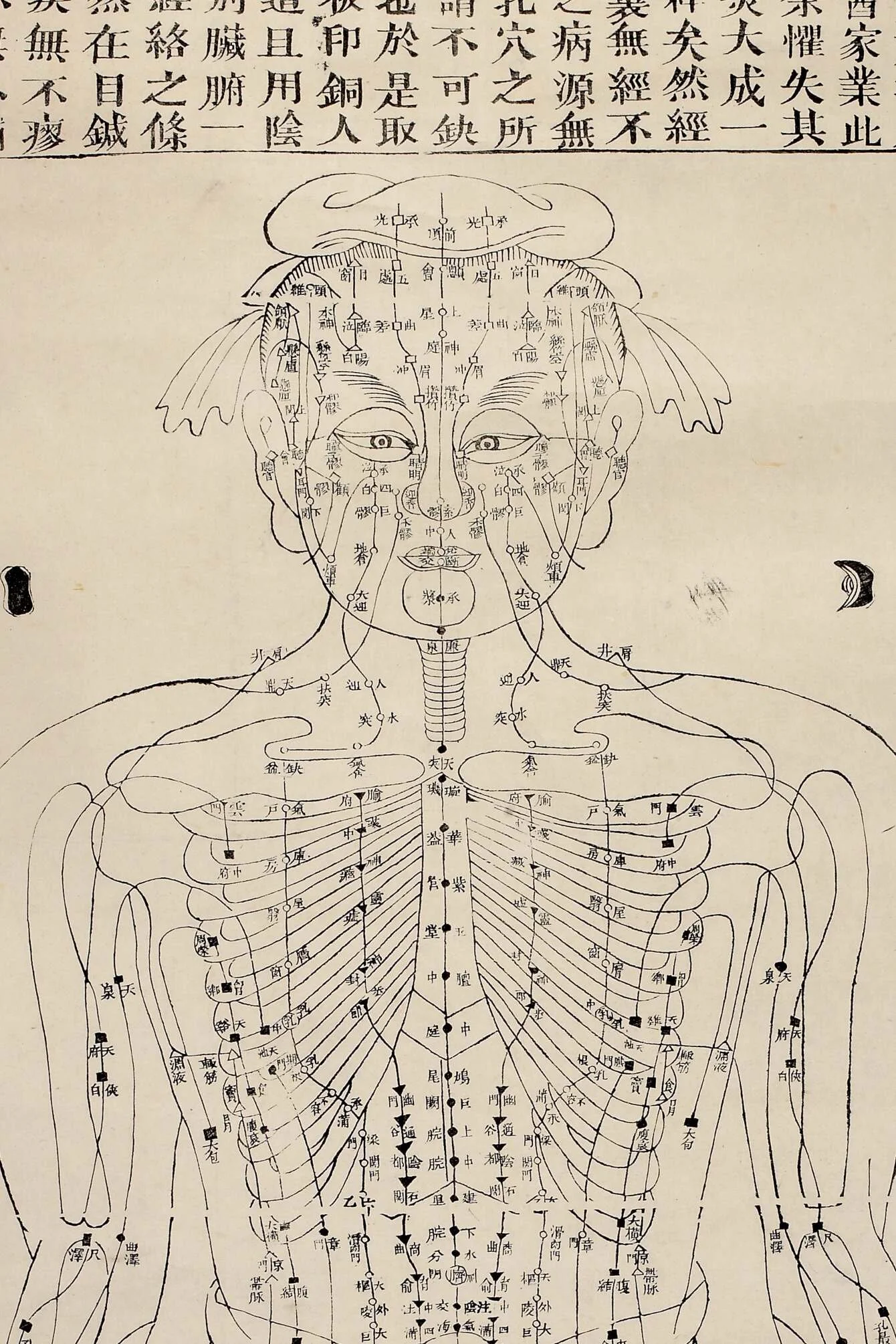
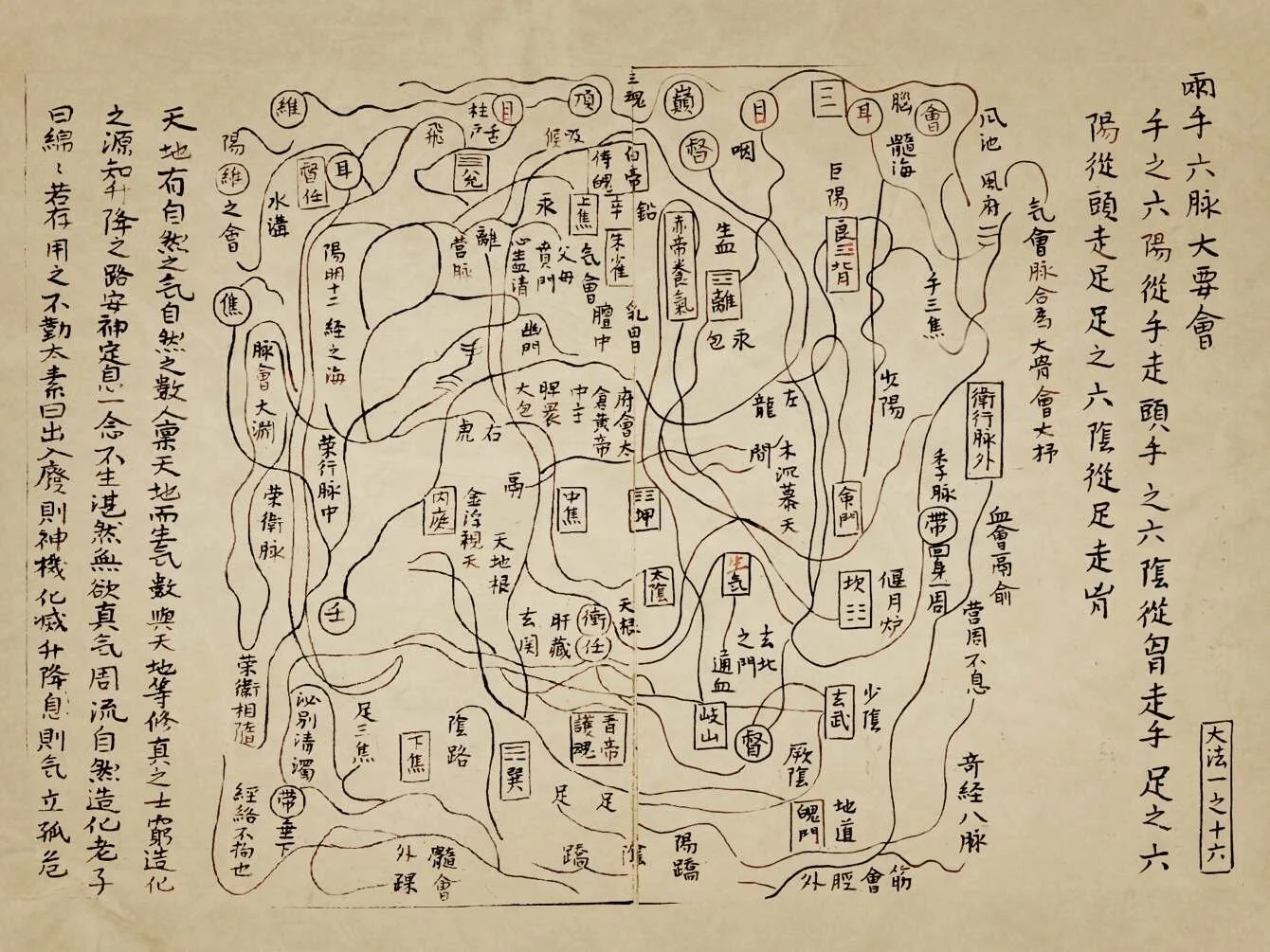
I see the meridian network as a symbolic order of the psyche and an esoteric anatomy of the body—a rhizomatic structure where psyche and soma form new connections. I summarize this in my clinical axiom: Make a puncture in a rhizome. Acupuncture becomes a puncture in a rhizome and a tonification of desiring-flows. Rather than seeing symptoms as a problem to be cured, I seek to understand their causative factors and rediscover their vital significance. In this sense, I conceive of treatment as an alchemical process that transforms symptoms into creative flows. My philosophy of meridian therapy is further elaborated in Méridiens du Parlêtre.
Style
My approach is influenced by classical and modern five-element styles, including European and Japanese schools of meridian therapy. I am also influenced by Japanese needling techniques and Tibetan moxibustion methods. I am passionate about understanding the therapeutic function of acupuncture points by examining their Chinese names and ideographic forms.
My treatment style is gentle, minimum-optimum, and bespoken to each person. Unlike most acupuncture treatments, I spend most of my time in the treatment room working with you. I mostly practice a non-retentive style of needling, where the needle is removed after the puncture. I am fond of using moxibustion for its gentle, rejuvenating heat, and use direct cone moxibustion (or chinetskyu). The flow of treatment consists of burning 3-7 moxa cones on an acupuncture point, followed by non-retentive and superficial needling. I typically treat up to five points in a session, carefully chosen for their energetic and spiritual connotations.
Rather than opposing symptoms, my approach seeks to understand the causative factors behind symptoms and to rediscover their vital significance. I naturally weave my training in Ayurveda and Tibetan medicine with acupuncture, drawing on diverse sources for dietary recommendations, lifestyle counseling, and herbal medicine.
Psychoanalysis / Schizoanalysis
The Imaginary • The Symbolic • The Real
What is Psychoanalysis?
Psychoanalysis was developed by Sigmund Freud in the early twentieth century. Described as the "talking cure" by one of Freud's earliest patients, psychoanalysis revolutionized the human situation of cure by placing it in the context of relational discourse.
In the late twentieth century, Jacques Lacan brought forth an original interpretation of Freud, birthing a new school of psychoanalysis in Paris. Lacan proposed that "the unconscious is structured like a language" and thus gave the talking cure its radical theoretical ground. Therefore, psychoanalysis is not a form of psychotherapy or medical treatment but an exploratory mode of discourse in which the unconscious is freely investigated through speech. In this sense, analysis is akin to a writing process—a movement from imposed speechto inspired writing.
The schizoanalytic tradition developed by Félix Guattari at the La Borde clinic extends Lacan's framework into the terrain of desire, flow, and creativity. I view the schizoanalytic project as a developmental stage of analysis, a transversal movement into post-Oedipal forms of subjectivity, where the symptom is realized as a vital desiring-flow, an aesthetic motive that becomes autopoetic. Schizoanalysis is where psychoanalysis enters transpersonal dimensions of experience and thus becomes an agent of spiritual transformation.
My Style
I practice with a Lacanian and schizoanalytic orientation that also inquires into the intersections between Eastern and Western thought. My project is an East-West dialectic, rooted in Lacan's teaching and my experience of Vedanta and Buddhism. I propose that psychoanalysis can be understood in relation to the Vedantic practice of inquiry and the Upanishadic tradition of discourse—where full speech becomes mahavakya (or "great utterances") that loosen the knotted threads of the unconscious. I explore these connections in my essay, "A Hamlet on the Ganges."
Every analysis is unique—from person to person and session to session. Rather than adopting a singular style, I allow analysis to reveal itself in every analysis.
Process
Psychoanalysis begins when a person expresses their desire to initiate an analysis. Sessions begin with face-to-face interviews before moving to the couch. The purpose of reclining in repose is to support free association—the speaking of whatever comes to mind—without the social imposition of face-to-face contact. Frequency, duration, and economic exchange are determined in each unique case.
I am available for personal analysis, training analysis, and supervision analysis. I work with people of all ages, life stages, and orientations.
Vedic Astrology / Human Design
What is Vedic Astrology?
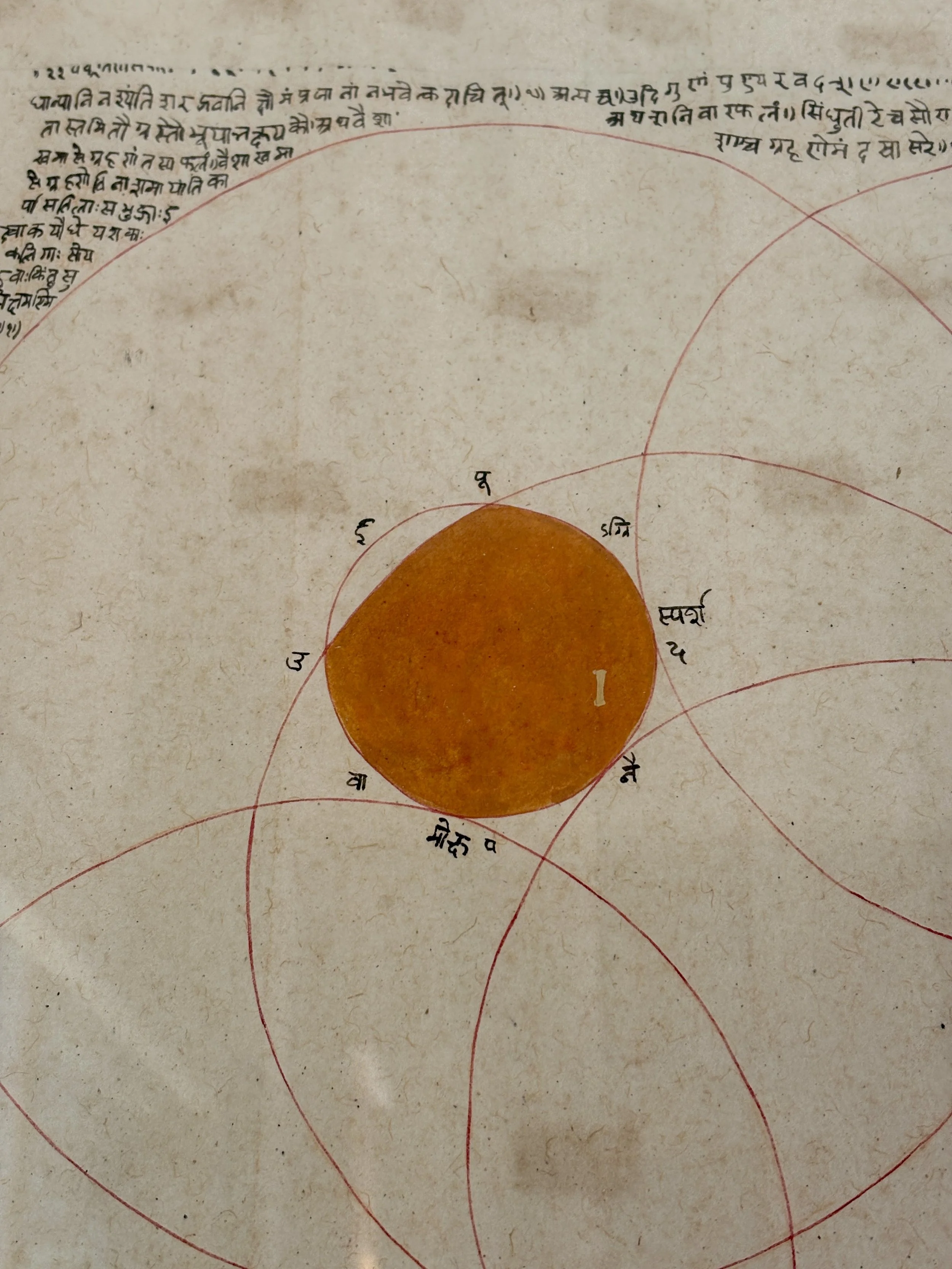
Vedic Astrology is the ancient astrological tradition of Indian culture. Known as the “eye of the Veda”, Vedic astrology is considered one of the six traditional Vedic sciences. Astrology arose as a development of indigenous divination practices. While divinatory practices drew on a worldview of magical correspondences and folk healing, astrology developed on the observable basis of astronomy. By calculating the precise position of the planets, ancient astronomers gave us the foundation of astrological knowledge.
Astrology maps the positions of the planets along the ecliptic, defined as the apparent path of the Sun around the Earth. Astrology refers to the ecliptic as the zodiac and divides the circle into twelve signs. These signs are associated with a complex spectrum of signs and symbols from the natural world and the mythology of Indian culture. Vedic astrology is thus a zodiacal system that examines planetary and constellational positions in the context of natal charts, yearly charts, and sixteen divisional charts.
What is Human Design?
Human Design is a new astrological system that synthesizes zodiacal astrology with the Yijing. The founder of the system, Ra Uru Hu, considers Human Design a revelatory system that was given to him by “the Voice”. Whether we accept this or not, the system has certainly impressed me with its accuracy and descriptiveness. I see Human Design as an essential complement to astrology, providing an original perspective of the constitutional blueprint and its dynamic differentiation.
My Style
The practice of Vedic astrology and Human Design takes the form of “readings”, where a chart is read to an inquiring client. In both cases, initial readings begin with a Natal Reading, where the birth chart (or bodygraph) is comprehensively analyzed for the client, and which becomes a foundation for future readings (yearly, compatibility, etc.). Learn more about the type of readings I offer below.
My style of reading is educational, accessible, and given thoroughly in the moment. I read for the unique person seeking the reading and speak to their present needs, rather than delivering a technical tour de force. I see astrology and human design readings as an opportunity for self-understanding and self-recognition, rather than a search for predictable knowledge.
Session Inquiry
Admission to the clinic is limited and and reserved for those interested in consistent, depth-oriented work. If you are interested in entering the practice, please fill out the form below and we will schedule an initial 15-minute consultation call regarding current availability and session frameworks.