
Ayurveda & Tibetan Medicine
Diet | Lifestyle | Herbal Medicine
Ayurveda is the traditional medical system of the Indian subcontinent. At over 5,000 years old, Ayurveda is the oldest recorded medical tradition of the world. As a system, Ayurveda defines health as a harmonious resonance between the individual and the world. Ayurveda teaches us how to prevent disease by living in correspondence with our unique constitution and surrounding environment. Ayurveda as not only articulated a preventative philosophy of medicine, it has also formulated a sophisticated clinical approach. For example, the roots of massage, surgery, herbalism, acupuncture, and psychotherapy can all be traced to Ayurvedic interventions.
Ayurvedic treatment includes a multi-modal approach of diet and lifestyle counseling, herbal therapies, and external therapies (moxibustion, marma therapy, massage). Ayurveda considers diet and lifestyle to be a first-line approach to treatment, after which external therapies and herbal medicine are applied as indicated.
Ayurvedic treatment begins by scheduling an Initial Visit (either in-person or online). During the Initial Visit, Neeshee will conduct a thorough health evaluation including the traditional diagnostics of pulse, tongue, and physical examination. After this, a marma treatment with moxibustion will be offered. Patients will be given dietary, lifestyle, and herbal recommendations as needed. Learn more about the initial visit and therapies offered below.
Neeshee Pandit has been practicing Ayurvedic medicine since 2013. Neeshee was first exposed to Ayurveda through his grandfather’s folk remedies and discussions of the Caraka Samhita. After completing his Ayurvedic studies, Neeshee began a traditional education in Tibetan medicine with Dr. Phuntsog Wangmo, which he he completed in 2020. As a practitioner, Neeshee specializes in marma therapy, moxibustion therapy, and herbal medicine. Neeshee practices in the Shaka Vansya lineage of Vaidya R.K. Mishra and the Tibetan medical lineage of Menpa Phuntsog Wangmo.
-
The initial visit begins with with an inquiry into the reasons for your visit—your medical history, current concerns, and long-term goals.
After the initial intake is concluded, I conduct a physical examination and traditional diagnostics—including pulse diagnosis, tongue diagnosis, abdominal palpation, and structural assessment. On this basis, dietary and lifestyle adjustments will be recommended alongside an individualized treatment plan including including Tibetan moxibustion treatments, Ayurvedic panchakarma therapies, and Tibetan herbal medicine. The initial visit concludes with a Tibetan Moxibustion treatment.
Student Rates: Students, please inquire about our student rates.
Distance patients: For patients living at a distance, health consultations are offered via Zoom and are focused on dietary, lifestyle, and herbal therapies.
-
Follow-up visits focus on acupuncture treatments with ongoing diet and lifestyle counseling, and adjustments to herbal prescriptions.
Package Pricing: Please inquire for package pricing on sets of 5 or 10 sessions.
Distance patients: For patients living at a distance, follow-up consultations are offered via Zoom.
Note: Re-fill of herbal medicines requires a follow-up visit to ensure appropriateness of formula and dosage and efficacy of formula per constitution and seasonal changes.
-
Neeshee is excellent at all things medical related - a master healer in his field. I highly recommend his services.
—J.W.
I had the most incredible healing by working with Neeshee Pandit. Even a few years later, I am still remarking about his therapies. He recommended diet and lifestyle changes, and a few herbs. But the most incredible progress we made was through distance Wuji Qi Gong therapy. I was able to receive treatments regularly from my own home, which was so relaxing and enjoyable. It was like I constantly got cleansed from the core of my being and rejuvenated with the life-force energy I had been so badly lacking. A few short months later I felt like a an entirely new person, I was vibrant and was ready to get back to work and to enjoy life again. I am so grateful for having had the opportunity to receive this profound healing.
—K.M.
My wife and I received both Astrology Readings and a treatment session with Neeshee. We we're in awe of his knowledge in the healing arts of Ayurveda, Tibetan Medicine, and Chinese Medicine. He is well rounded and quite intuitive.
—T.T.
-
“One who is established in the Self—who has balanced doshas, balanced agni (digestive fire), properly formed dhatus (tissues), proper elimination of malas (wastes), properly functioning kriya (bodily processes), and whose senses, mind, and consciousness is full of clarity and bliss—is known as a healthy person. ”
About Tibetan Medicine (གསོ་བ་རིག་པ་།)
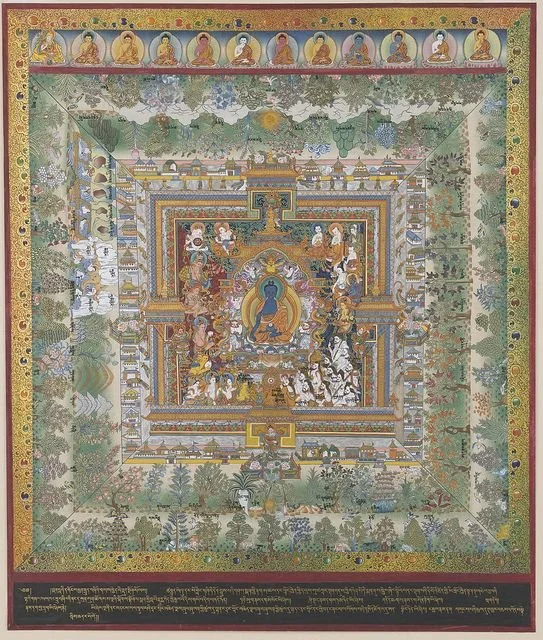
Tibetan Medicine is one of the oldest medical systems of the world, originating more than 2500 years ago. Tibetan Medicine is known traditionally as "Sowa Rigpa" (གསོ་བ་རིག་པ་།), a rich phrase with several meanings—"the knowledge of healing", "the vision of healing", and "the healing arts".
While distinctly Tibetan in its presentation, Sowa Rigpa is a comprehensive healthcare system that transcends cultural barriers, historically integrating the indigenous (shamanic and folk) traditions of Tibet with the medical systems of neighboring countries over many centuries. Tibetan Medicine stands as a summary of the existing medical knowledge of the time—integrating Indian, Chinese, Greek, and Persio-Arabic medical systems with the shamanic traditions of the Himalayan region. Tibetan Medicine is currently the preferred medical system for treating chronic diseases in the Himalayan and trans-Himalayan regions, including Europe and North America, where it is especially valued for its intricate pharmacology and diverse treatment approaches.
The highly nuanced therapeutic approach of Tibetan Medicine views the body, mind, and spirit as an interdependent system governed by an innate energetic intelligence. Tibetan medicine is thus characterized by a holistic and systems-based approach that emphasizes the unique body-mind constitution of each individual. On this basis, Tibetan Medicine employs a multimodal approach to diagnosis—observation, palpation, and inquiry.
Observation refers to a perceptual diagnosis, established via observation of urine, tongue, color, sound, odor, and emotion. Palpation refers to a tactile diagnosis, accomplished via palpation of the radial artery of both wrists—assessing the state of twelve internal organs, five elements, and three humors. Inquiry refers to an investigative diagnosis based on interviewing the patient about their medical history and current concerns.
These three diagnostic modes rely upon the physician’s ability to perceive the physical, mental, and spiritual aspects of the patient and thus characterize the person-centered approach of Tibetan Medicine. Once a diagnosis is formed, Tibetan Medicine employs four lines of treatment: dietary and behavioral adjustments, herbal medicines, and external therapies (moxibustion, needle therapies, massage therapies, and medicinal baths).